
virginia work area protection manual
The Virginia Work Area Protection Manual (VWAPM), Part 6 of the Virginia MUTCD, provides crucial guidelines for safe, effective temporary traffic control.
This 2026 edition supersedes the May 2005 version, ensuring alignment with current federal standards and best practices for worker and public safety.
It supplements the MUTCD, offering detailed specifications for managing traffic within Virginia’s work zones, enhancing overall roadway safety.
Purpose and Scope of the VWAPM
The primary purpose of the Virginia Work Area Protection Manual (VWAPM) is to establish and maintain safe temporary traffic control zones (TTCZs) throughout the Commonwealth of Virginia. This manual serves as a comprehensive guide for anyone involved in work zone operations, including contractors, utility companies, and VDOT personnel.
Its scope encompasses all temporary traffic control measures implemented due to maintenance, construction, or emergency situations impacting roadways. The VWAPM details requirements for signage, pavement markings, channelization devices, and flagging procedures. It aims to protect both workers and the traveling public by minimizing risks associated with work zones.
Furthermore, the manual ensures consistency in traffic control practices across Virginia, adhering to—and often exceeding—Federal Highway Administration (FHWA) standards.
VWAPM as Part 6 of the Virginia MUTCD
The Virginia Work Area Protection Manual (VWAPM) officially functions as Part 6 of the Virginia Supplement to the Manual on Uniform Traffic Control Devices (MUTCD). This integration signifies its legal standing and authority within the state’s traffic control framework.
By being a component of the Virginia MUTCD, the VWAPM isn’t a standalone document but rather an extension providing specific guidance tailored to Virginia’s unique conditions and regulations. It builds upon the national MUTCD standards, offering more detailed instructions for temporary traffic control.
This relationship ensures that all traffic control practices in Virginia work zones are consistent with both federal guidelines and state-specific requirements, promoting safety and uniformity.
Revision History: From 2005 to 2026 Edition
The Virginia Work Area Protection Manual (VWAPM) has undergone significant evolution since its initial publication in May 2005. The current 2026 edition represents a substantial update, reflecting advancements in traffic control practices and lessons learned from field experience.
The 2026 version incorporates changes to address known errors and enhance clarity, building upon the foundation laid by the 2011 edition. These revisions aim to improve worker safety and optimize traffic flow through work zones.
This ongoing refinement process demonstrates Virginia’s commitment to maintaining a current and effective manual, ensuring best practices are consistently implemented across the state.

Key Updates in VWAPM Version 11.0 (2026)
Version 11.0 introduces critical changes, including corrections of known errors and enhanced guidance, aligning with the January 2026 VDOT Work Zone Field Guide.
The 2026 VWAPM (Version 11.0) incorporates several key updates designed to improve work zone safety and traffic flow. These revisions address identified errors from previous editions, ensuring clarity and accuracy in implementation. Significant changes align with the newly released January 2026 VDOT Work Zone Field Guide, providing a cohesive approach to temporary traffic control.
Updates focus on refining guidance for signage placement, particularly concerning steel plate warnings (6F.55), and enhancing clarity around flagging procedures. The manual continues to emphasize the importance of retroreflective materials and high-visibility safety apparel, referencing specific visibility requirements. This version maintains its role as Part 6 of the Virginia MUTCD, exceeding federal standards.
Known Errors and Corrections (2026 Edition)
The 2026 edition of the VWAPM includes a dedicated section addressing known errors identified post-publication. This proactive approach ensures users have access to the most accurate information for implementing temporary traffic control measures. Corrections primarily focus on clarifying ambiguous language within specific sections, enhancing consistency across the manual.
Currently, a comprehensive list of these errors is available on the official website, with updates posted as they are discovered. Users are encouraged to regularly check for revisions to ensure compliance. This commitment to transparency and accuracy reflects VDOT’s dedication to worker and public safety within Virginia work zones.
Relationship to the January 2026 VDOT Work Zone Field Guide
The January 2026 VDOT Work Zone Field Guide, formerly known as the Work Zone Safety Guidelines, serves as a practical companion to the comprehensive VWAPM. While the VWAPM details the ‘why’ behind traffic control, the Field Guide offers concise, on-the-ground guidance for implementation.
Considered an informal resource, it distills key information from the VWAPM into a readily accessible format for field personnel. It doesn’t replace the VWAPM’s authority, but rather supplements it, providing quick reference for common work zone scenarios. Both resources work in tandem to promote safe and efficient traffic management.

General Principles of Work Zone Traffic Control
Effective work zone traffic control prioritizes protecting both workers and the traveling public through careful planning and implementation of temporary traffic control zones (TTCZ).
Safety is paramount.
Protecting Workers and the Traveling Public
The core principle of the Virginia Work Area Protection Manual (VWAPM) centers on safeguarding the lives and well-being of both the roadway workers and the motorists navigating through temporary traffic control zones. This is achieved by establishing clear, consistent, and readily understandable traffic control measures.
These measures encompass appropriate signage, pavement markings, channelization devices, and the strategic deployment of flaggers. The VWAPM emphasizes proactive risk assessment and mitigation, ensuring that all potential hazards are identified and addressed before work commences.
Ultimately, the goal is to minimize disruptions and prevent accidents, fostering a safe environment for everyone sharing the roadway.
Temporary Traffic Control Zones (TTCZ) Defined
The Virginia Work Area Protection Manual (VWAPM) defines a Temporary Traffic Control Zone (TTCZ) as an area on a roadway where lane closures, reductions in shoulder width, or other alterations to the normal traffic flow occur due to work activities.
These zones are dynamic and evolve as work progresses, requiring continuous monitoring and adjustments to traffic control measures. TTCZs encompass the work space, the buffer space, and the traffic control zone itself, each serving a specific purpose in protecting workers and motorists.
Effective TTCZ implementation is paramount for maintaining safe and efficient traffic movement.
Importance of Planning and Implementation
The Virginia Work Area Protection Manual (VWAPM) emphasizes that meticulous planning and diligent implementation are fundamental to successful work zone traffic control. A comprehensive traffic control plan, developed before work begins, is essential.
This plan must consider all potential hazards, traffic volumes, and roadway characteristics. Proper implementation involves correctly placing and maintaining all traffic control devices, ensuring clear and consistent messaging to motorists.
Failure to adequately plan or implement can lead to congestion, crashes, and increased risk to both workers and the traveling public.

Work Zone Traffic Control Elements
Effective traffic control relies on strategically deployed signage, pavement markings, and channelization devices, alongside properly trained flaggers following established procedures.
These elements work together to guide motorists safely through work zones, minimizing disruptions and enhancing safety.
Signage Requirements
The VWAPM meticulously details signage requirements for work zones, emphasizing advance warning signs to alert drivers of upcoming changes in traffic patterns. These signs must adhere to specific size, shape, and placement guidelines outlined within the manual.
Proper sign visibility, including retroreflective sheeting specifications, is paramount, ensuring clear communication during both day and night.
Specific sign types, like those warning of steel plates (6F.55), have dedicated placement instructions. Consistent and accurate signage is crucial for minimizing risks and maintaining a safe flow of traffic through the work area, protecting both workers and the traveling public.
Pavement Markings and Channelization Devices
The VWAPM emphasizes the critical role of pavement markings and channelization devices in guiding traffic safely through work zones. These elements clearly delineate travel paths, alerting drivers to lane shifts, closures, and potential hazards.
Approved devices include traffic cones, drums, and barricades, each with specific placement and maintenance requirements.
Properly applied temporary pavement markings, like arrows and lane dividers, reinforce the guidance provided by signage and physical barriers. Consistent application and regular inspection of these devices are essential for maintaining a predictable and safe traffic flow, minimizing confusion and potential collisions.
Flaggers and Flagging Procedures
The VWAPM dedicates significant attention to flagger safety and standardized procedures, recognizing their vital role in directing traffic during work zone operations. Flaggers must receive proper training, ensuring they understand and consistently apply established signaling techniques.
These procedures cover aspects like flagger positioning, visibility requirements (including high-visibility apparel), and appropriate hand signal usage.
Clear communication and consistent signaling are paramount to avoid driver confusion and maintain a safe flow of traffic. The manual details specific guidelines for various work zone scenarios, emphasizing the importance of attentive monitoring and proactive traffic management.

Specific Work Zone Scenarios
The VWAPM provides detailed guidance for common situations like lane closures, detours, shoulder work, and areas with pedestrian/bicycle traffic, ensuring safety.
These scenarios outline specific traffic control device placements and procedures.
Lane Closures and Detours
The VWAPM emphasizes clear, advanced warning for lane closures and detours, utilizing appropriate signage and pavement markings to guide motorists safely. Advance warning signs must be strategically placed, providing sufficient notice of upcoming changes in traffic patterns.
Detour routes require detailed signing, ensuring drivers understand the alternate path. Flaggers may be necessary to direct traffic through complex detour configurations. The manual stresses the importance of maintaining consistent lane widths and minimizing disruptions to traffic flow. Proper channelization devices, like cones and drums, are crucial for defining the temporary roadway alignment.
Consideration for large vehicles and emergency access is paramount during lane closure and detour planning.
Shoulder Work and Restrictions
The VWAPM details specific procedures for shoulder work, recognizing the potential for encroachment into travel lanes. Adequate warning signage is essential, alerting drivers to reduced shoulder widths or complete shoulder closures. Pavement markings should clearly delineate the work area and guide traffic.
Flaggers may be deployed to manage traffic safely when work activities necessitate lane restrictions. Emphasis is placed on maintaining sufficient clear zone distances from the work area to minimize risks. The manual highlights the importance of considering truck traffic and ensuring adequate space for safe maneuvering.
Regular inspection and maintenance of traffic control devices are crucial during shoulder work operations.
Work Near Pedestrians and Bicyclists
The VWAPM emphasizes heightened awareness when work zones intersect with pedestrian and bicycle routes. Temporary pedestrian walkways should be clearly marked and separated from vehicular traffic using barriers or channelization devices. Signage must alert users to potential hazards and detours.
Consideration should be given to providing alternative routes for pedestrians and bicyclists, minimizing conflicts with construction vehicles. Flaggers play a vital role in safely guiding vulnerable road users through work zones. Reduced speeds are often necessary to enhance safety.
Visibility of pedestrians and cyclists must be maximized, especially during low-light conditions.
Work Clothing and Visibility
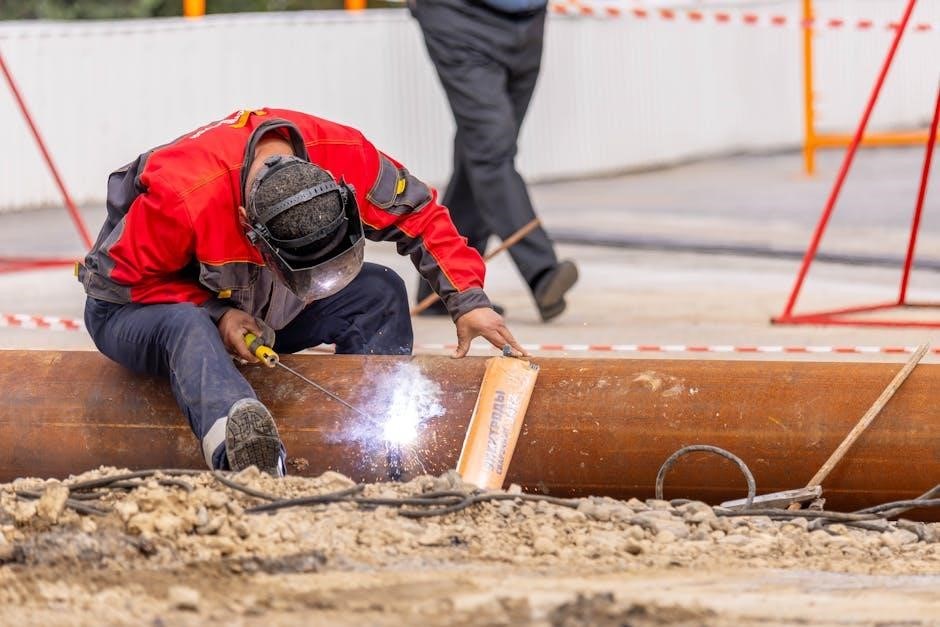
The VWAPM mandates retroreflective material on work clothing, visible at a minimum distance, ensuring worker safety. High-visibility apparel is crucial for daytime and nighttime operations.
Compliance with specified visibility standards is essential for all personnel within temporary traffic control zones.
Retroreflective Material Specifications
The Virginia Work Area Protection Manual (VWAPM) details stringent requirements for retroreflective materials used in work zone clothing. These specifications are critical for ensuring adequate visibility of workers, particularly during low-light conditions and inclement weather.
VWAPM dictates the minimum levels of retroreflectivity needed for different types of garments and accessories, aligning with ANSI/ISEA standards. The manual emphasizes the importance of using materials that maintain their reflectivity throughout their service life, even after repeated washing and exposure to environmental factors.
Specific classes of retroreflective materials are designated based on the risk level of the work being performed, with higher classes required for tasks involving greater exposure to traffic. Proper selection and application of these materials are paramount for worker safety.
Visibility Requirements and Minimum Distances
The Virginia Work Area Protection Manual (VWAPM) establishes clear visibility requirements for workers operating within temporary traffic control zones. These guidelines specify the minimum distances at which workers must be visible to approaching drivers, ensuring sufficient reaction time.
VWAPM dictates that retroreflective materials must be visible at a specified distance, dependent on the posted speed limit and roadway characteristics. Factors like ambient lighting, weather conditions, and driver eye height are also considered.
Compliance with these minimum distance requirements is crucial for mitigating the risk of work zone accidents and protecting both workers and the traveling public. Regular assessment of visibility conditions is essential;
High-Visibility Safety Apparel
The Virginia Work Area Protection Manual (VWAPM) mandates the use of high-visibility safety apparel for all personnel working within temporary traffic control zones. This apparel must meet specific retroreflective material standards to ensure maximum visibility for approaching drivers.
VWAPM details the required classes of garments – typically vests, jackets, or pants – based on the work activity and potential exposure to traffic hazards. The level of retroreflectivity is also specified, ensuring adequate visibility during both daylight and nighttime conditions.
Proper garment selection and maintenance are critical for effectiveness. Apparel must be clean, undamaged, and appropriately sized for each worker, contributing to a safer work environment.
Advanced Warning and Notification
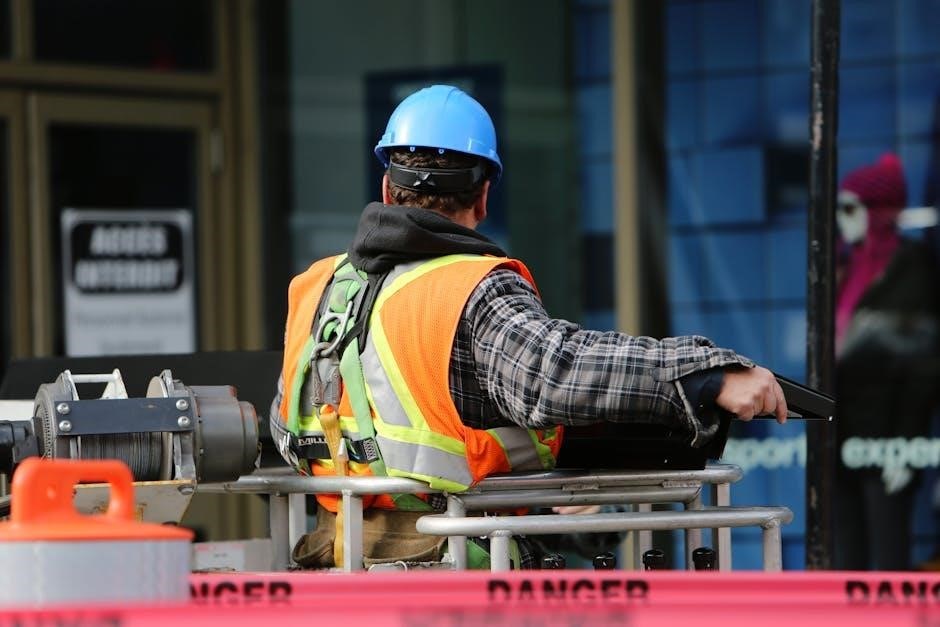
The VWAPM emphasizes proactive communication through advance warning signs, Variable Message Signs (VMS), and public information channels to alert motorists of work zones.
Effective notification minimizes disruptions and enhances safety for both workers and the traveling public.
Advance Warning Sign Placement
The Virginia Work Area Protection Manual (VWAPM) dictates precise placement of advance warning signs, crucial for driver awareness and safe speed reduction approaching work zones. Sign positioning considers factors like roadway geometry, speed limits, and anticipated traffic volumes.
Generally, signs are placed in advance of the work zone, providing sufficient notice for drivers to react. Longitudinal placement follows specific distance guidelines, varying with speed.
Transverse placement ensures visibility and proper sign orientation. The VWAPM details requirements for sign size, shape, and legend, emphasizing clarity and consistency to maximize comprehension and minimize driver confusion, ultimately enhancing safety for everyone.
Use of Variable Message Signs (VMS)
The Virginia Work Area Protection Manual (VWAPM) recognizes Variable Message Signs (VMS) as a powerful tool for real-time traffic management within work zones. VMS provide dynamic updates on conditions like lane closures, delays, and alternate routes, exceeding the capabilities of static signage.
Effective VMS deployment requires careful message design – concise, clear, and easily understood at highway speeds. The VWAPM outlines best practices for message content, font size, and display duration.
Strategic VMS placement, considering visibility and driver expectation, is also critical. Utilizing VMS proactively enhances driver awareness and allows for informed decisions, contributing significantly to work zone safety and reduced congestion.
Public Information and Communication
The Virginia Work Area Protection Manual (VWAPM) emphasizes proactive public information as a cornerstone of successful work zone management. Beyond signage, effective communication builds awareness and minimizes disruption for travelers.
This includes utilizing VDOT’s website, social media channels, and press releases to disseminate information about planned work, potential delays, and detour routes. Collaboration with local media outlets further expands reach.
Clear, consistent messaging is paramount. The VWAPM encourages providing ample advance notice, allowing motorists to plan accordingly and reducing frustration. Open communication fosters cooperation and enhances safety for everyone.

Traffic Control Devices
The VWAPM details specifications for cones, barricades, drums, and barriers, emphasizing proper placement and consistent maintenance to effectively guide traffic safely.
Adherence to these guidelines is crucial for establishing clear, predictable traffic patterns within work zones throughout Virginia.
Types of Traffic Cones and Barricades
The VWAPM specifies various types of traffic cones and barricades for different applications within work zones. Type I barricades, robust and heavy, are used for positive protection, redirecting traffic with significant force.
Type II barricades, lighter and more economical, are suitable for guiding traffic and delineating temporary hazards. Traffic cones, available in multiple sizes and reflectivity levels, are ideal for channeling traffic and marking short-term lane closures.
The manual emphasizes the importance of using devices that meet specific reflectivity standards, ensuring visibility during both day and night conditions, ultimately enhancing worker and motorist safety.
Drum and Barrier Specifications
The VWAPM details stringent specifications for drums and barriers used in Virginia work zones. Drums, often utilized for temporary lane closures, must meet reflectivity requirements for optimal visibility. They are categorized by size and material, impacting their suitability for various traffic speeds and conditions.
Barriers, including concrete and water-filled types, provide a higher level of protection, effectively shielding workers from errant vehicles. The manual outlines specific dimensions, weight requirements, and impact resistance standards for each barrier type.
Proper selection and placement, adhering to VWAPM guidelines, are crucial for maximizing safety and minimizing risks within the temporary traffic control zone.
Proper Placement and Maintenance
The VWAPM emphasizes that correct placement of traffic control devices is paramount for effectiveness. Devices must be strategically positioned to provide clear guidance to motorists, anticipating their sightlines and reaction times. Spacing and offset requirements are meticulously defined within the manual.
Regular maintenance is equally critical. Devices must be inspected frequently for damage, fading reflectivity, or displacement. Damaged or missing components must be promptly repaired or replaced to maintain consistent warning levels.
Consistent adherence to these placement and maintenance protocols ensures a safe and predictable traffic flow through work zones.

Steel Plate Ahead Signs (6F.55)
The VWAPM’s Section 6F.55 details requirements for warning motorists about steel plates covering roadway surfaces, ensuring driver awareness and safety.
Specific sign placement guidelines and associated traffic control measures are outlined for optimal visibility.
Requirements for Steel Plate Warning
The Virginia Work Area Protection Manual (VWAPM) mandates clear and conspicuous warning signage when steel plates are present on roadways. These plates, used for temporary repairs, pose a hazard due to potential impacts and changes in traction.
Signage, adhering to specific size and reflectivity standards, must be strategically placed to provide adequate warning distance for drivers. The 6F.55 specification emphasizes the need for consistent messaging and placement, considering factors like speed limits and roadway geometry.
Properly implemented warnings are critical for mitigating risks and ensuring the safety of both workers and the traveling public navigating work zones with steel plate coverage.
Sign Placement Guidelines
The Virginia Work Area Protection Manual (VWAPM) details precise guidelines for sign placement within temporary traffic control zones. These guidelines prioritize visibility and driver comprehension, ensuring adequate warning of potential hazards.
Factors like speed limits, roadway alignment, and sight distance dictate appropriate sign spacing and positioning. Advance warning signs must be placed far enough upstream to allow drivers sufficient reaction time;
Consistent adherence to these guidelines, as outlined in Section 6F.55 and others, is crucial for effective traffic management and minimizing risks within Virginia work zones, safeguarding both workers and motorists.
Associated Traffic Control Measures
The Virginia Work Area Protection Manual (VWAPM) emphasizes that steel plate warnings are rarely standalone solutions. Effective traffic control necessitates a comprehensive suite of measures alongside the “Steel Plate Ahead” sign (6F.55).
These include reduced speed limits, lane closures, flaggers, and enhanced pavement markings to channelize traffic safely around the hazard. Proper deployment of traffic cones and barricades is also vital.
The VWAPM stresses a layered approach, combining signage with physical controls to maximize driver awareness and minimize the risk of incidents near steel plates or similar roadway disruptions.

Frequently Asked Questions (FAQ)
An updated FAQ addressing common VWAPM inquiries is currently under development and will soon be available on the official website for public access.
The prior 2011 FAQ remains accessible, offering valuable insights while the new version is finalized and posted online.
Accessing the Updated FAQ
The highly anticipated updated Frequently Asked Questions (FAQ) document for the Virginia Work Area Protection Manual (VWAPM) is slated for release and publication on the official Virginia Department of Transportation (VDOT) website. Users should regularly check this dedicated online resource for the latest information and clarifications regarding the 2026 edition.
Once available, the FAQ will be easily accessible, providing a centralized location for answers to common questions concerning signage, flagging procedures, and other critical aspects of work zone traffic control. This resource aims to streamline understanding and promote consistent application of VWAPM guidelines.
Common Questions Regarding Signage
Frequently asked questions concerning signage within Virginia work zones often center on proper placement, visibility, and adherence to the VWAPM’s specifications. Common inquiries involve the correct use of advance warning signs, particularly those related to lane closures or potential hazards like steel plates (6F;55).
Users also seek clarification on sign size, retroreflectivity requirements, and appropriate spacing intervals. Understanding these details is crucial for ensuring drivers receive timely and accurate information, promoting safety for both workers and the traveling public. The updated FAQ will address these concerns.
Clarification on Flagging Procedures
Questions regarding flagging procedures frequently arise concerning proper flagger positioning, attire, and signaling techniques as outlined in the VWAPM. Common concerns involve maintaining consistent and clear communication with drivers, especially during nighttime or adverse weather conditions.
Clarification is often sought on the appropriate use of stop/slow paddles, hand signals, and the required visibility of flaggers. The updated FAQ will provide detailed guidance on these aspects, ensuring flaggers effectively control traffic flow and minimize risks within temporary traffic control zones, prioritizing safety.