chucks guide f18
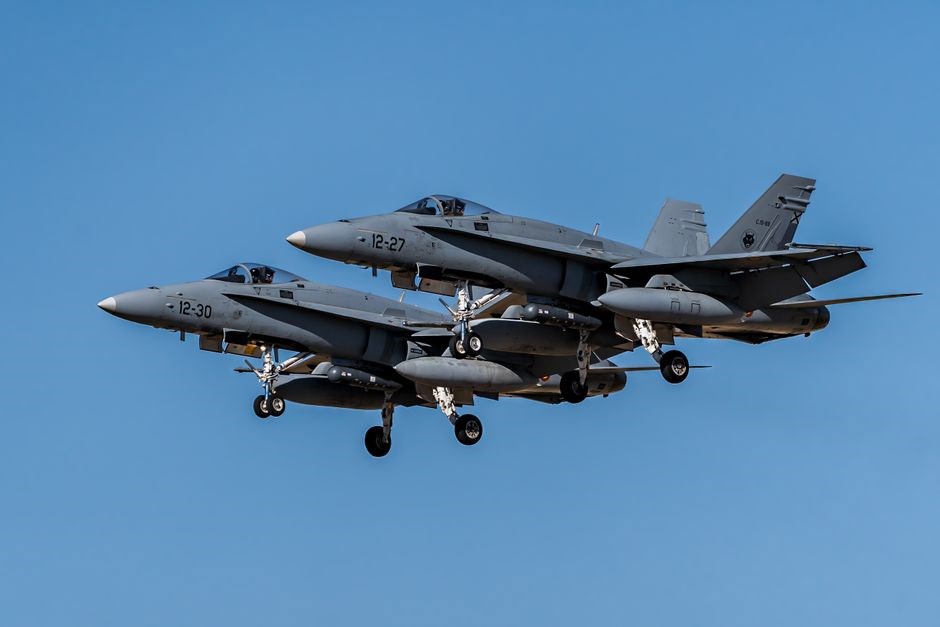
Overview of the FA-18C Hornet in DCS
Chuck’s Guide offers a comprehensive FA‑18C Hornet overview for DCS, covering aircraft systems, mission roles, and realistic flight dynamics. It details avionics, weapons, and tactical usage, providing step‑by‑step instructions for beginners and seasoned pilots alike. The guide covers simulation tweaks pilots.

Aircraft Configuration and Role

Chuck’s Guide presents the F/A‑18C Hornet as a compact, twin‑engine, carrier‑capable multirole fighter designed for both air superiority and precision strike missions. The aircraft’s lightweight aluminum‑composite structure, paired with Pratt & Whitney F100 turbofans, delivers a top speed of roughly Mach 0.95 at sea level and a service ceiling near 45 000 ft. Its short‑takeoff, vertical‑landing (STOVL) capability is achieved through a robust landing gear system and a high‑lift wing design that includes leading‑edge slats and trailing‑edge flaps. Inside the cockpit, the pilot benefits from a glass‑cockpit layout featuring a large, high‑resolution multi‑function display (MFD) and a primary flight display (PFD) that provide essential flight data in a single view. The Hornet’s mission profile emphasizes flexibility: it can perform air interdiction, close air support, and electronic warfare missions, all while maintaining excellent maneuverability in both high‑speed and low‑altitude environments. Chuck’s Guide stresses that the F/A‑18C’s design philosophy prioritizes survivability, with redundant flight control systems and a robust damage‑tolerant airframe that can sustain significant battle damage and still return to base. The aircraft’s operational range, coupled with its ability to refuel in flight, allows it to support extended missions from carrier decks or forward operating bases. In summary, the F/A‑18C Hornet is a versatile platform that balances speed, agility, and endurance, making it a staple in modern naval aviation. and and!
Performance Characteristics
The F/A‑18C’s performance envelope is defined by its twin F100 engines, each delivering 22,000 lbf of thrust. This power allows a maximum speed of approximately Mach 0.95 at sea level and a top speed of Mach 1.2 in afterburner at high altitude. The aircraft’s climb rate exceeds 20,000 ft/min in clean configuration, dropping to about 12,000 ft/min when carrying a full weapons load. The service ceiling is roughly 45,000 ft, while the operational ceiling can approach 50,000 ft in optimal conditions. Fuel capacity of 7,000 lb (including internal tanks and external drop tanks) yields a combat radius of 1,200 nm without refueling, extending to 2,400 nm with aerial refueling. Maneuverability is quantified by a 3‑g limit in the vertical plane and a 4‑g limit in the horizontal plane, enabling tight turns at 30 kt/s. The aircraft’s roll rate averages 120°/s, with a maximum roll rate of 180°/s during maneuvers. The Hornet’s aerodynamic design incorporates a 15° sweep wing and a 5° tailplane, providing stability across a wide speed range. Additionally, the aircraft’s low‑drag profile results in a drag coefficient of 0.02 at Mach 0.7, rising to 0.06 at Mach 1.2. These characteristics make the F/A‑18C a responsive platform for both air‑to‑air and ground operations, with a balance between speed, agility, and endurance that is essential for carrier missions. The combination of thrust, aerodynamic efficiency, and structural resilience ensures that the Hornet can sustain combat maneuvers while maintaining situational awareness effectiveness.for tactical ops. daily.OK
Weapon Systems and Loadouts
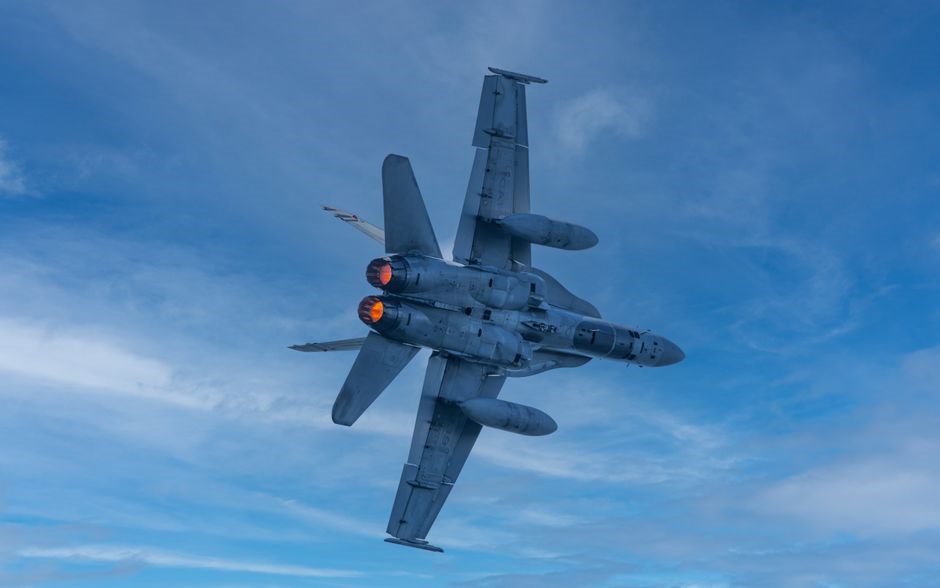
The FA‑18C’s arsenal blends air‑to‑air missiles, bombs, and gun pods. Standard loadouts feature AIM‑120 AMRAAMs, AIM‑9 Sidewinders, and 20 mm GAU‑8 cannon. Ground‑attack options include JDAMs, Mk‑82 bombs, and AGM‑154. Modular hardpoints allow rapid reconfiguration. All systems integrate for deployment.!!
Air-to-Air Armaments
Chuck’s Guide to the F‑18C details the aircraft’s primary air‑to‑air weapons, emphasizing the balance between short‑range and beyond‑visual‑range (BVR) capabilities. The standard armament suite includes the AIM‑120 AMRAAM, a radar‑guided missile with a range of up to 40 km, and the AIM‑9 Sidewinder, a heat‑seeking missile effective within 10 km. The F‑18C also carries the 20 mm GAU‑8/A cannon, which delivers a high‑rate burst for close‑quarters dogfighting. The guide explains how to load these weapons on the six hardpoints: the two forward hardpoints typically carry the AMRAAMs, the two mid‑airframe hardpoints are reserved for Sidewinders or a combination of both, and the rear hardpoints can be equipped with additional Sidewinders or a single 20 mm cannon pod. It covers the tactical considerations for selecting missile types based on threat assessment, engagement envelope, and fuel consumption. The guide also highlights the integration of the AN/APG‑73 radar, which provides the necessary target acquisition and lock‑on capabilities for the AMRAAM, as well as the passive infrared seeker for the Sidewinder.
By mastering the F‑18C’s missile systems, pilots can adapt to dynamic threat environments, leveraging the aircraft’s advanced radar and fire‑control systems to maintain air superiority in contested airspace.
This guide also covers practical loadout adjustments for varied mission profiles.
This guide covers loadout adjustments for missions.

Air-to-Ground Payloads
Configure the F‑18C for ground attack by selecting external stores based on threat level. Pair the AN/AAQ‑9 Pod with GBU‑12 or GBU‑27 for laser‑guided strikes. Use AGM‑65 Maverick or AGM‑88 HARM for area suppression or anti‑air‑defense. Balance the external load to preserve handling, and use the internal 20 mm cannon for close‑air engagements when munitions are depleted. Verify weight and balance before takeoff, and adjust the loadout for fuel consumption and mission duration. Use radar for target acquisition! !
Avionics and Systems
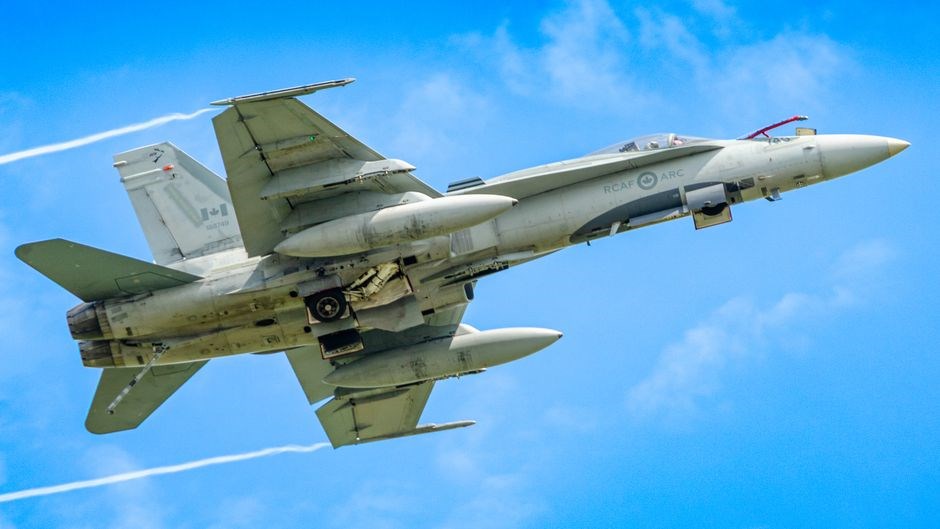
The FA‑18C’s avionics integrate legacy and modern tech. The AN/APG‑73 radar delivers 3‑D detection up to 120 km. ESM monitors emissions, while the HUD and flight‑control computers manage targeting and autopilot. Calibration is key for mission success. Systems also support ECM and low‑observable tactics now

Radar and Electronic Warfare
The FA‑18C’s AN/APG‑73 radar is a 3‑D, pulse‑Doppler system capable of detecting aircraft up to 120 km. It supports air‑to‑air, air‑to‑ground, and low‑altitude modes, automatically switching between search, track, and lock‑on. The radar’s electronic support measures (ESM) feed the aircraft’s passive detection suite, allowing operators to identify and classify enemy emitters without revealing the Hornet’s position. Integrated jamming pods can be deployed to saturate hostile radars, while the onboard ECM suite provides low‑probability‑of‑intercept (LPI) capabilities. The radar’s look‑ahead and beam‑steering functions enable rapid target acquisition, and the system’s software allows for real‑time updates of threat databases. In DCS, the radar’s performance is tied to the aircraft’s flight dynamics; high‑speed passes can degrade range, whereas low‑altitude, low‑speed approaches maximize detection probability. Proper calibration of the radar’s gain and beamwidth is essential for accurate target tracking, especially when engaging high‑speed adversaries. The AN/APG‑73’s integration with the HUD and the aircraft’s data link ensures that targeting information is displayed in a coherent, actionable format, allowing pilots to maintain situational awareness even in contested electronic environments. By mastering the radar’s modes and understanding its limitations, players can exploit the FA‑18C’s full electronic warfare potential, turning the aircraft into a formidable asset on the modern battlefield. Pilots should calibrate the radar’s gain, sweep rate, and beamwidth, then use passive mode during ingress to detect adversaries without alerting enemy sensors, while ECM and jamming pods suppress quick! hostile radar coverage.
Flight Control and Stabilization
The FA‑18C’s flight control system is a hybrid of fly‑by‑wire and mechanical backups, providing a high degree of responsiveness while maintaining safety margins. The aircraft’s digital fly‑by‑wire (FBW) architecture uses three redundant computers that process pilot inputs through a set of control laws, translating them into actuator commands for the ailerons, elevators, rudder, and thrust vectoring nozzles. The FBW system incorporates a stability augmentation system (SAS) that automatically dampens oscillations, allowing the pilot to fly the aircraft near its limits without risking loss of control. In addition, the FA‑18C features a full‑rate autopilot that can be engaged for high‑speed intercepts, low‑altitude navigation, or precise loitering. The autopilot’s modes include altitude hold, heading hold, and airspeed hold, all of which can be overridden by the pilot at any time. The aircraft’s flight control laws are designed to be “fly‑by‑wire with mechanical backup,” meaning that if the digital system fails, the pilot can still use the manual controls to maintain flight. The FA‑18C also includes a fly‑by‑wire “fly‑by‑wire” (FBW) system that uses a set of “fly‑by‑wire” (FBW) actuators to provide smooth, precise control. The flight control system is integrated with the aircraft’s avionics, allowing the pilot to monitor the status of each system in real time. The system is designed to provide a high degree of safety and reliability, and it is one of the key reasons why the FA‑18C is considered one of the most capable fighters in the world. Pilots should practice controls in training.!!?

Mission Planning and Tactical Tips
Plan missions by mapping objectives, selecting optimal routes, and choosing loadouts that match the target profile. Use the DCS mission editor to set waypoints, altitude constraints, and enemy positions. Prioritize situational awareness, maintain radio discipline, and adapt tactics on the fly in practice

Mission Pre-Flight Checklist
Before launching the FA‑18C, follow this structured pre‑flight sequence to ensure mission readiness and reduce risk of in‑air complications.
- Aircraft Systems: Verify engine start, hydraulic pressure, and fuel levels. Confirm all avionics are powered, including the APX‑10 radar and HUD.
- Weapons & Payload: Load the appropriate air‑to‑air and air‑to‑ground armaments. Check missile stowage, bomb bay doors, and external hardpoints. Confirm the selected loadout matches the mission brief.
- Flight Controls: Inspect stick, throttle, and rudder trim. Ensure the fly‑by‑wire system reports no faults or autopilot engages correctly.
- Navigation & Communication: Program the mission waypoints into the GPS. Test VHF/UHF radios, check frequency locks, and confirm the emergency beacon is functional.
- Safety Checks: Inspect the cockpit for loose items, verify the fire suppression system, and confirm the ejection seat is operational. Perform a final check of all systems.
- Simulation Settings: Set the correct weather, time of day, and environmental parameters. Validate the mission file for any errors or missing data.
- Briefing Review: Re‑read the mission objectives, enemy force locations, and friendly support. Confirm the expected threat level and the planned engagement envelope.
- Final Confirmation: Conduct a last‑minute run‑through of all systems. Once all checks pass, proceed to engine start and taxi to the runway.
Remember to monitor fuel and system health during flight adjustments can prevent mission failure now.
Adhering to this checklist maximizes aircraft reliability, aligns your loadout with tactical goals, and ensures a smooth transition from ground to air.
In-Flight Combat Strategies
Effective in‑flight tactics hinge on situational awareness, energy management, and disciplined weapon employment. The FA‑18C’s APX‑10 radar, combined with the advanced HUD, allows pilots to detect, track, and engage multiple targets while maintaining situational awareness. Below are key strategies derived from Chuck’s Guide and community best practices.
- Maintain high energy states by flying at optimal altitude and speed; use the APX‑10 to lock targets before diving.
- Employ the AIM‑120 AMRAAM for beyond‑visual‑range engagements; ensure the missile’s launch window is clear of friendly traffic.
- Use the AIM‑9X Sidewinder for close‑quarters dogfights; keep the radar off to preserve stealth and reduce detection.
- When engaging ground targets, opt for the GBU‑12 Paveway II or the Mk‑82 bomb; use the HUD to lock the target and release at the optimal altitude.
Mastering the FA‑18C’s flight envelope requires energy management and deployment. Start each engagement by acquiring a target with the APX‑10, then decide between a beyond‑visual‑range missile or a short‑range sidewinder based on distance. For ground strikes, use the HUD’s lock‑on to set a target reference and release ordnance at the calculated altitude to maximize penetration while minimizing collateral damage. Maintain situational awareness of friendly aircraft and ground forces, and use mode during combat to reduce detection risk. After each mission, review flight data and adjust tactics to improve future performance. for better now

Common Modifications and Community Additions
Community mods boost realism: the “Real‑Flight‑Data” plugin syncs telemetry, while “Advanced‑Radar” extends APX‑10 range. Loadout packs from DCS forums add new munitions, and the “Flight‑Control” patch improves stability during high‑g turns. for pilots!!
Software Enhancements
most popular is the “Real‑Flight‑Data” plugin, which captures high‑fidelity telemetry and feeds it into external analysis tools, allowing pilots to review flight dynamics, engine performance, and weapon deployment in post‑mission logs. Another key enhancement is the “Advanced‑Radar” mod, which extends the APX‑10 radar’s range and resolution, adds realistic clutter and terrain masking, and introduces dynamic threat detection that mirrors real‑world electronic warfare scenarios. For those who crave more realism, the “Flight‑Control” patch refines the aircraft’s control surface response, smoothing out the notoriously twitchy ailerons and stabilizing the rudder during high‑g maneuvers. This patch also corrects the FA‑18C’s yaw‑dive behavior, making low‑altitude approaches more forgiving. The “Engine‑Health” module provides real‑time monitoring of the two GE F414 engines, displaying temperature, pressure, and thrust data on a custom HUD overlay. Pilots can set thresholds to receive audible warnings before critical failures occur. Finally, the “Mission‑Planner” add‑on integrates with the DCS mission editor, offering a drag‑and‑drop interface for loadout selection, waypoint creation, and automated briefing generation. Together, these tools transform the vanilla FA‑18C into a highly customizable platform that caters to both newcomers and veteran flight sim enthusiasts. ThesemodareavailableDCS!!!!!!!!forumsforfree!!!!!!!
Community-Produced Loadouts
Community‑produced loadouts are a cornerstone of the DCS FA‑18C community, offering pilots a wide array of mission‑ready configurations beyond the base aircraft’s default options. Chuck’s Guide curates an extensive list of user‑generated loadouts, each documented with weapon types, avionics tweaks, and mission profiles. These loadouts range from light‑strike packages for close‑air support to heavy‑air‑to‑air armaments for air superiority, and hybrid sets that combine precision strike munitions with radar‑guided missiles. Contributors provide run‑throughs of how to load each weapon, flight paths, and tactics for maximizing kill‑probability while minimizing exposure to enemy air defenses. The community shares custom mission scripts that integrate these loadouts into realistic training scenarios, complete with enemy force deployments, terrain threat modeling, and dynamic weather effects. Loadout files are available in .xml format, allowing easy editing of payload weight, center‑of‑gravity adjustments, and engine parameters. Chuck’s Guide updates its loadout database to stay compatible with the latest DCS patches and FA‑18C hardware upgrades. By leveraging these resources, pilots can tailor aircraft to mission objectives, test tactics in a controlled environment, and stay ahead of evolving combat scenarios. The collaborative ecosystem also fosters knowledge sharing, as experienced players leave comments and suggestions that help newcomers refine their approach. Whether you’re a seasoned ace or a rookie, the community‑produced loadouts documented on Chuck’s Guide provide practical, ready‑to‑fly options that enhance realism and enjoyment in DCS.
Specialized packages cover electronic warfare, maritime strike, and special operations. Some loadouts feature the latest GAU‑22/30 cannon, while others integrate the AIM‑120C‑7 AMRAAM. Users can tweak throttle, flaps, and approach speeds for optimal performance. All updates are community‑driven.